Introduction
Protein is an essential nutrient in our diet and helps to build/maintain muscle, support the immune system, send signals throughout the body, and maintain overall health. In IgA Nephropathy (IgAN), protein leaks into the urine, often in large amounts. This article reviews what protein is, how to incorporate it in measured amounts, alternative protein sources beyond meat, and how to build your daily structure around protein. Remember, nutrition needs are individualized, and specific recommendations should be made by your dietitian or healthcare provider.
Why Protein Matters in IgAN
When diagnosed with IgAN, people may or may not have kidney damage. A common symptom of IgAN is losing protein in the urine. Protein is essential for the body, and our kidneys are responsible for filtering protein in our blood.
- Protein is necessary to build and repair tissues.
- As kidney function changes, protein needs may also change.
- Research suggests that moderate protein intake, rather than high-protein diets, is generally recommended for many people with chronic kidney disease, although individual recommendations vary (1).
- Quality and portion size are often just as important as the protein source.
Does Protein Timing Matter?
Protein helps to repair muscle after exercise and wounds, it is an essential part of hair, bones, blood, hormone regulation, etc and aids in feeling full at the end of a meal. The amount a person needs is individual, based on their stage of kidney disease, personal health goals, and growth.
Practical strategies:
- The most important aspect of protein is to meet your protein goal by the end of the day.
- Spreading protein evenly throughout the day instead of eating most at one meal can help make people feel full and satisfied throughout the day.
- Include low to moderate amounts of protein with meals and snacks, allowing for larger portions at meal times.
- Pair protein with fiber-rich foods such as vegetables and whole grains to aid in nutrition and fullness.
- Ideally plan exercise before meal times so that protein during the meal is used for muscle repair and helps decrease hunger post workout as the body temperature cools.
- After workouts use whole food as post exercise protein supplementation instead of powders or drinks. Ask your healthcare provider or dietitian whether post-exercise protein recommendations should be included.
Protein helps to prevent hunger and promote overall energy when eaten throughout the day versus in one large meal.
What Are Alternative Proteins?
The majority of people consider protein to be those foods that come from animal sources like beef, chicken, fish, eggs and dairy products. Protein is included in plant sources as well.
Examples include:
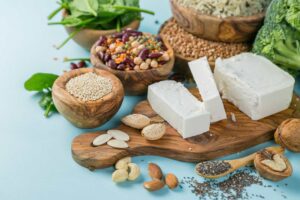
Plant-Based Proteins
- Beans
- Lentils
- Chickpeas
- Edamame
- Tofu
- Tempeh
Other Alternatives
- Unsalted nuts and seeds
- Nut butters
- Quinoa
- Soy milk (fortified, unsweetened)
- Pea protein products (choose minimally processed options)
Plant sources of protein can be protein rich and be included in your eatting pattern. These foods are typically not as protein dense as animal sources. This allows someone on a moderate protein diet to eat more food and feel full after a meal. These proteins sources are also cholesterol free and fiber full promoting heart health, weight and blood sugar management. These foods have historically been disregarded in a kidney friendly diet due to potassium and phosphorus content. It is important to know that animal products are also rich in potassium and phosphorus. The potassium and phosphorus in plant sources are generally less absorbable than meat products and additive forms.
Portion Sizes: Finding the Right Balance
Plant sources of protein typically include 8-10gm of protein per serving. Each food has its own protein content so reading labels are important when determining how much protein to eat. Many times adding multiple plant protein sources into one meal can increase appeal and help to meet protein needs. An example would be adding chickpeas and pine nuts to a salad.
Below are examples of plant proteins that are 8-10gm of protein per serving.
- 3 ounces cooked tofu
- ½ cup cooked beans or lentils
- ¼ cup unsalted nuts
- 2 tablespoons nut butter
- ½ cup edamame
Tips for Adding More Plant-Based Protein
Meals can be fully plant based or include some animal protein. The following examples are great ways to start to add more plant protein sources to meals.
Examples include:
- Add tofu to vegetable stir-fries.
- Replace part of the ground meat in recipes with beans, lentils or mushrooms in recipes like chili or stews.
- Blend white beans into soups for added creaminess.
- Snack on a small portion of unsalted nuts.
- Use hummus as a spread instead of processed deli meats.
- Try meatless meals once or twice each week.
Conclusion
Plant proteins can easily fit into a IgAN eatting pattern. There is no one perfect eating pattern for all people with IgAN. Plant proteins are one additional option to include. Choosing a variety of protein sources, mindfully choosing portions of protein and eating protein through out the day can help to feel full and enjoy your meals. Each persons protein goals are different and a renal dietitian or healthcare team should help to develop a personalized plan. Check out the IgAN app for more plant forward recipes.
Citations:
- Patel, J., Kalantar‑Zadeh, K., Betz, M., & Joshi, S. (2023). A low‑protein, plant‑dominant gluten‑free diet for Immunoglobulin A nephropathy and focal segmental glomerulosclerosis. Advances in Kidney Disease and Health, 30(6), 517–522. https://doi.org/10.1053/j.akdh.2023.09.001

 Seasonal Superfoods for IgA Nephropathy: Eating Your Best Throughout the Year
